Do you and your partner keep having the same argument without ever really resolving it?

Has your connection faded — and you can’t remember the last time you genuinely enjoyed each other’s company?

Do you and your partner keep having the same argument without ever really resolving it?

Are your child’s struggles at home, school, or with friends affecting the whole family?

Is your teenager showing signs of depression, anxiety, anger, or withdrawal that feel bigger than typical growing pains?

Do you wish your child had a safe, supportive space to talk to someone outside the family — someone specially trained to help kids?

When Relationships Get Hard

You Don’t Have to Stay Stuck

Our primary relationships can be challenging and, at times, deeply painful. When we feel stuck in an intimate relationship, it can feel like nothing is right in the world. With our busy lives, it is easy to become disconnected without even noticing it happening.

Signs of disconnect often show up as bickering over small things, having the same argument repeatedly without resolution, or struggling to laugh and feel at ease with each other. Small things start to feel big. You might feel stuck in a rut, unable to remember the last time you looked forward to seeing your partner.

Sometimes, relationships sustain a more direct hit — an affair, dishonesty, pornography use, addiction, or another significant trauma. In those moments, you might wonder whether your relationship can recover at all — or whether you want it to. These are real and valid questions, and you don’t have to answer them alone.

How We Help: Our Approach

Getting Back to Each Other

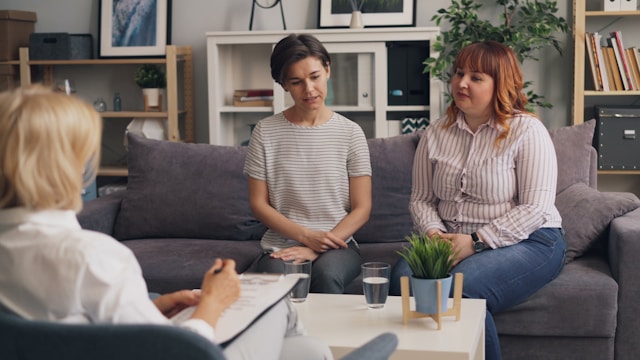
Our couples therapists are trained and skilled in helping partners navigate and heal from difficult times in their relationships. Whether you are dealing with communication breakdown, emotional distance, conflict, betrayal, or simply the slow drift that can happen over years of busy life, we are here to help.

We use a range of evidence-based, relationship-focused approaches, including:

Gottman Method

Grounded in decades of research on what makes relationships succeed or fail, the Gottman Method helps couples build deeper friendship, manage conflict more effectively, and create shared meaning together.

Emotionally Focused Therapy (EFT)

EFT helps couples identify and shift the negative interaction cycles that keep them stuck, rebuilding secure emotional connection and trust.

Mind/Body Practices

We incorporate somatic and mindfulness-based techniques to help partners regulate their nervous systems during difficult conversations — making it possible to stay present and connected even when things get hard.

Brain Science-Informed Techniques

Drawing on the latest in neuroscience, we help couples understand how their brains and nervous systems interact in relationship — and how to work with that, rather than against it.

Our goal is to help you and your partner regain your lost connection, heal from past hurts, and move forward together — better than ever.

couples therapy in seattle

The Benefits of Couples Counseling

couples therapy in seattle

Couples counseling offers meaningful benefits for partners at every stage — whether you’re navigating a crisis, feeling disconnected, or simply wanting to build a stronger foundation together:

Improved Communication

One of the most immediate and lasting benefits of couples therapy is learning to communicate more clearly and compassionately. Partners develop tools for expressing needs, listening without defensiveness, and breaking out of the circular arguments that go nowhere.

Rebuilt Emotional Connection

Over time — or after a significant rupture — emotional intimacy can fade. Therapy creates a structured, safe space to turn toward each other again, rebuild trust, and rediscover the closeness that brought you together in the first place.

Tools for Managing Conflict

All couples have conflict — the difference between relationships that thrive and those that don’t is how conflict is handled. Therapy teaches practical, research-backed skills for navigating disagreement without contempt, stonewalling, or lasting damage to the relationship.

Healing After Betrayal or Trauma

Whether it’s infidelity, dishonesty, addiction, or another breach of trust, recovery is possible — but it takes intentional, supported work. Our therapists are skilled at guiding couples through the painful process of rebuilding trust and creating a relationship that feels genuinely safe again.

Renewed Intimacy and Partnership

Therapy helps couples reconnect not just emotionally, but in all dimensions of partnership — physical intimacy, shared goals, fun, and friendship. Many couples describe feeling more in love after therapy than they did before their difficulties began.

Clarity During an Ending

When a relationship is ending, therapy can help both partners move through that process with dignity, mutual respect, and less lasting harm — particularly for any children involved. A well-supported ending can set the foundation for a healthier co-parenting relationship and individual healing.

Growth, Even When Coming Alone

For those who come to solo couples counseling, the benefits are real and significant. Gaining perspective on relationship patterns, improving how you communicate and respond, and doing your own inner work creates genuine change — in you and, often, in the relationship dynamic as a whole.


When a Relationship Is Ending

Support for Separation, Divorce & Conscious Uncoupling

Couples counseling is not only for relationships you want to save. Sometimes, ending a relationship is the right choice for everyone involved — and doing that well matters enormously, especially when children are part of the picture.

We are here to support you through this transition with care and respect. We can help both partners process the grief of losing the relationship, communicate more effectively during a difficult time, and — when desired — build a new relationship based on mutual respect and co-parenting partnership.

Research consistently shows that couples who continue to work on their relationship through a divorce significantly reduce the negative effects of that transition on their children. We take that seriously, and we’re here to help.

Couples Counseling for One

When Your Partner Won’t Come to Therapy

Do you feel your relationship could benefit from couples counseling, but your partner isn’t ready or willing to participate? Don’t lose hope — we can still help.

We offer “solo couples counseling” for individuals who want to improve their relationship, even when only one partner is in the room. This approach helps you gain perspective on relationship dynamics, develop more effective communication strategies, and do your own meaningful work — which is, after all, half of the relationship.

Change in one partner almost always creates movement in the relationship as a whole. Individual relationship work is a powerful place to start.

Serving the Bellevue, Kirkland, Redmond, and Seattle areas, OptimalLife Wellness is here to help you and your partner heal. Contact us to have a quick and easy conversation with our scheduling coordinator, who will match you and your needs with one of our couples therapists. Together, we will help you learn how to become your best self.

Our online therapy services, facilitated by skilled therapists, provide personalized care for stress, anxiety, and depression. Regardless of your location in Washington State, quality mental health care is just a click away. Our secure and user-friendly online therapy appointments ensure privacy while offering flexibility and convenience, making mental health care more accessible than ever.

Frequently Asked Questions About Couples Therapy

If you and your partner are having the same arguments repeatedly without resolution, feeling emotionally distant, struggling to connect, or navigating a significant breach of trust — those are all strong indicators that couples counseling could help. You don’t need to be in crisis to benefit. Many couples come to therapy simply wanting to strengthen a relationship that’s already good.

Our therapists are trained in a range of evidence-based approaches including the Gottman Method, Emotionally Focused Therapy (EFT), mind/body practices, and brain science-informed techniques. Your therapist will work with you to identify which approaches are the best fit for your specific situation and goals.

In most cases, yes — couples therapy works best when both partners are present. However, there are times when individual sessions within the couples work are valuable, and we also offer solo couples counseling for individuals whose partners are not ready or willing to participate.

Absolutely. Couples counseling can help you navigate separation and divorce with greater clarity, less conflict, and more mutual respect. This is especially important when children are involved. Research shows that how couples manage their ending has a significant impact on children’s long-term well-being. We are here to support that process, whatever direction it takes.

Yes. We offer solo couples counseling — individual sessions focused specifically on your relationship dynamics, communication patterns, and personal growth within the relationship. Change in one partner creates real movement in a relationship. It’s a meaningful place to start, and often opens the door to further work together down the road.

It depends on the complexity of the issues you’re working through and your goals as a couple. Some couples see meaningful progress in 8–12 sessions. Others, particularly those healing from significant betrayal or working on longer-standing patterns, benefit from more extended work. Your therapist will discuss goals and timelines with you collaboratively from the start.

Yes. Everything discussed in couples therapy is confidential, with the standard exceptions required by law (such as safety concerns). We do ask couples to discuss and agree on confidentiality expectations at the outset — particularly around whether either partner might also see a therapist individually — so that everyone feels clear and safe in the process.

Coverage for couples counseling varies by insurance plan. Please visit our Rates & Insurance page for current information, or call our office at (425) 646-2778 — our scheduling coordinator will be happy to help you understand your options.